Now Reading: Reachy Mini Goes Fully Local: On-Device AI Changes Everythin
- 01
Reachy Mini Goes Fully Local: On-Device AI Changes Everythin
Reachy Mini Goes Fully Local: On-Device AI Changes Everythin
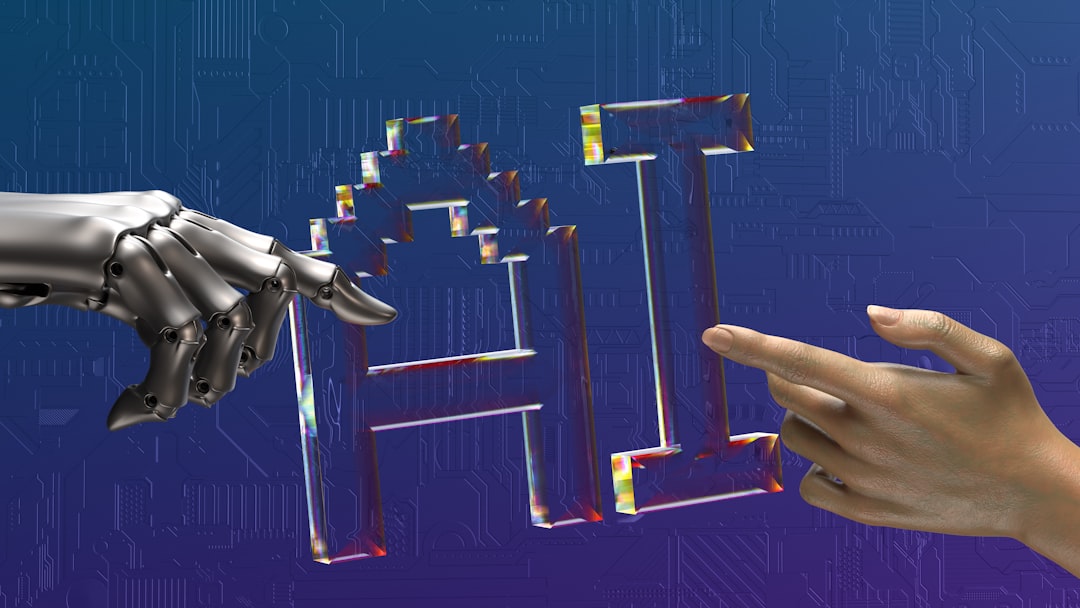
Reachy Mini from Pollen Robotics now goes fully local, running all AI models on-device without cloud dependency. This article explores what this means for robotics, privacy, and the broader shift toward edge AI — and who stands to benefit most.
What happens when a humanoid robot no longer needs the cloud to think? That’s exactly the question Reachy Mini is now answering — and the implications stretch far beyond a single product launch.
Pollen Robotics, the French company behind the Reachy platform, has made a decisive move: the compact Reachy Mini now goes fully local, running its AI models entirely on-device without relying on remote servers. In a landscape where latency, privacy, and reliability are becoming non-negotiable, this shift signals something much bigger for the future of robotics and edge AI.
In this article, we’ll break down what Reachy Mini’s local-first architecture means, why it matters for developers and end users, and how it fits into the broader movement toward on-device intelligence.
What Is Reachy Mini, and Why Should You Care?
Reachy is a line of open-source humanoid robots built by Pollen Robotics. The original Reachy gained attention in research labs and educational settings for its expressive upper body, modular design, and accessible software stack. It wasn’t trying to compete with Boston Dynamics — it was trying to make human-robot interaction approachable and hackable.
Reachy Mini is the smaller, more affordable sibling. Think of it as the Raspberry Pi of humanoid robots: compact, developer-friendly, and designed to lower the barrier of entry. But until now, some of its more advanced AI features — natural language processing, vision-based tasks, and behavioral models — still depended on cloud connectivity.
That dependency is officially gone. If you’ve been following our coverage of OlmoEarth v1.1: A More Efficient Earth Observation AI, you’ll know this is part of a much larger trend.
What “Fully Local” Actually Means
Let’s be precise about what “goes fully local” entails, because the phrase gets thrown around loosely in tech marketing. In the case of Reachy Mini, it means:
- On-device inference: All AI models — including language understanding, object recognition, and decision-making — run directly on the robot’s onboard hardware.
- Zero cloud dependency: Reachy Mini can operate in environments with no internet connection whatsoever. No Wi-Fi? No problem.
- Local data processing: Sensor data from cameras and microphones never leaves the device, which is a massive win for privacy-sensitive deployments.
- Reduced latency: Without the round trip to a remote server, response times drop dramatically — critical for real-time human-robot interaction.
This isn’t just a firmware update. It required rethinking model optimization, compressing neural networks to run on constrained hardware, and redesigning the software pipeline from the ground up.
Why Local AI Is the Future of Robotics
The cloud has been the default crutch for AI-powered devices for nearly a decade. It made sense when on-device compute was too weak and models were too large. But the equation has changed — rapidly.
Advances in model quantization, efficient transformer architectures, and powerful edge chips (think NVIDIA Jetson, Qualcomm’s AI Engine, and Apple’s Neural Engine) mean that serious AI workloads can now run locally. Edge computing is no longer a compromise — it’s a competitive advantage.
For robotics specifically, local processing solves three critical problems:
- Reliability: A robot that freezes because the Wi-Fi dropped is useless in a warehouse, hospital, or classroom.
- Privacy: Deploying robots with cameras and microphones in sensitive environments demands that data stays local. GDPR and similar regulations make this non-optional in many markets.
- Speed: A 200-millisecond cloud round trip might seem trivial on paper, but in face-to-face interaction, it’s the difference between a robot that feels responsive and one that feels broken.
Who Benefits Most from This Shift?
Researchers and Educators
Universities and labs were already Reachy’s core audience. A fully local mini robot means researchers can experiment with embodied AI without worrying about API costs, rate limits, or data governance approvals. It also makes classroom deployments far simpler — no IT department negotiations over network access.
Healthcare and Assisted Living
Companion robots in eldercare settings need to process speech and recognize faces without sending that data to external servers. Reachy Mini’s local architecture makes it a viable candidate for pilot programs in environments where patient privacy is paramount.
Developers Building Custom Applications
Because Reachy’s stack is open-source, developers can swap in their own local models. Want to run a fine-tuned LLM on the device for a specific use case? The architecture now supports that without requiring a cloud backend. For those exploring similar projects, our guide on MashuPack: Turn Codebases Into Clean Files for AI Models covers several platforms worth investigating.
How Reachy Mini Compares to the Competition
Reachy Mini isn’t the only small robot vying for developer attention. Products like Unitree’s Go2 and various platforms from Trossen Robotics offer compelling alternatives. But most competitors still rely on hybrid architectures where heavier AI tasks are offloaded to the cloud or a nearby workstation.
What sets Reachy apart is the combination of three factors: a fully local AI pipeline, an open-source ecosystem, and a humanoid form factor designed for natural interaction. That’s a niche, but it’s a strategically important one as human-robot interaction research accelerates globally.
It’s worth noting that “fully local” doesn’t mean “permanently offline.” Reachy Mini can still connect to the internet for software updates, model downloads, and optional cloud features. The key difference is that connectivity is a choice, not a requirement.
Practical Takeaways for AI Enthusiasts
If you’re considering Reachy Mini for a project — or simply watching the local AI trend — here are the key points to keep in mind:
- Budget for hardware wisely: On-device AI demands capable onboard compute. Make sure the Mini’s specs match your model requirements before committing.
- Optimize your models: Running a 7B parameter model locally isn’t the same as running it on an A100 in the cloud. Quantization and pruning are your friends.
- Think about the deployment environment: Local-first shines in offline, privacy-sensitive, or low-latency scenarios. If your use case doesn’t fit those categories, a hybrid approach might still make more sense.
- Leverage the community: Pollen Robotics has cultivated an active developer community. Tap into their forums and GitHub repos before reinventing the wheel.
The Bigger Picture
Reachy Mini going fully local isn’t just a product update — it’s a signal. The era of assuming every intelligent device needs a cloud tether is ending. As models get smaller and hardware gets more capable, we’ll see this pattern repeat across drones, wearables, home assistants, and industrial robots.
For developers, researchers, and companies building the next generation of AI-powered tools, the lesson is clear: design for the edge first, and treat the cloud as an enhancement rather than a foundation.
If you’re working on a project that could benefit from local AI — whether it involves a mini humanoid robot or something else entirely — now is the time to start experimenting. The tools are here. The hardware is ready. And as Reachy Mini just proved, the cloud is officially optional.
Previous Post
Next Post


Advertisement