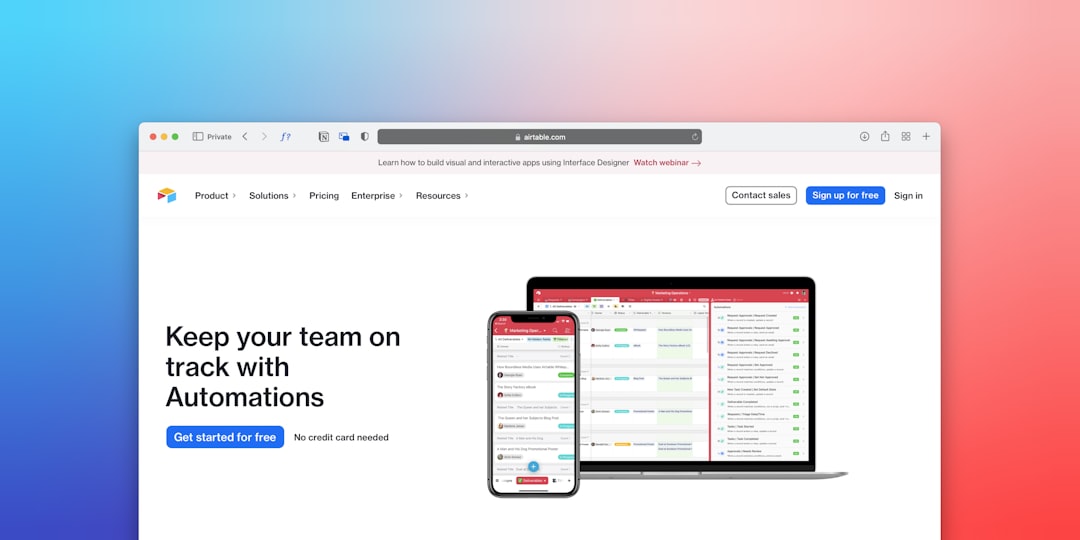
Django Unfold transforms the default admin interface into a modern, KPI-rich dashboard. This article breaks down how to build one with custom models, filters, actions, and real-time metrics for e-commerce and AI-driven applications.

Django Unfold transforms the default admin interface into a modern, KPI-rich dashboard. This article breaks down how to build one with custom models, filters, actions, and real-time metrics for e-commerce and AI-driven applications.
IBM's Rob Thomas argues that as AI matures from standalone product to foundational infrastructure, enterprise organizations must invest in robust governance frameworks to protect margins. The shift demands new strategies for managing AI risk, compliance, and operational efficiency at scale.

Tech giants like Apple and Qualcomm are developing next-generation AI agents that can navigate apps and complete tasks autonomously — but with deliberate approval checkpoints at sensitive moments. Here's why the industry is betting on a human-in-the-loop approach and what it means for the future of AI assistants.

Knowledge distillation offers a practical way to compress the intelligence of large ensemble models into a single lightweight student model suitable for production deployment. By training on the ensemble's soft probability outputs rather than hard labels, the student inherits nuanced predictive patterns while remaining fast and cost-efficient.

Alibaba's Tongyi Lab has released VimRAG, a multimodal RAG framework that uses a memory graph to efficiently navigate massive visual contexts. The system addresses critical limitations in how AI agents handle images and video during multi-step reasoning, offering a graph-based alternative to linear context history.

A new coding tutorial demonstrates how to build a complete markerless 3D human kinematics pipeline using Pose2Sim, RTMPose, and OpenSim entirely within Google Colab. The guide walks through calibration, pose estimation, triangulation, and inverse kinematics, making research-grade biomechanical analysis accessible to anyone with a browser.
Meta launched Muse Spark, a powerful proprietary AI model from its new Meta Superintelligence Labs, marking a dramatic departure from the open-source Llama strategy that earned it 1.2 billion downloads. The shift raises serious questions about developer trust, competitive dynamics, and Meta's long-term AI identity.
As EU AI Act enforcement ramps up through 2025 and 2026, organizations deploying agentic AI systems face serious governance challenges. Autonomous agents that chain decisions across enterprise systems create accountability gaps that leaders must urgently address to avoid steep regulatory penalties.
AI no longer runs on a single processor type. This guide compares the five essential compute architectures every engineer needs to understand in 2025—CPUs, GPUs, TPUs, NPUs, and LPUs—breaking down their strengths, limitations, and ideal use cases.
Meta's Superintelligence Labs has launched Muse Spark, the first in a new family of natively multimodal reasoning models. Featuring thought compression, parallel agent orchestration, and visual chain of thought, Muse Spark represents a bold architectural bet in the intensifying race toward advanced AI systems.