Now Reading: IMF Cuts Global Growth Forecast During Hormuz Blockade
- 01
IMF Cuts Global Growth Forecast During Hormuz Blockade
IMF Cuts Global Growth Forecast During Hormuz Blockade
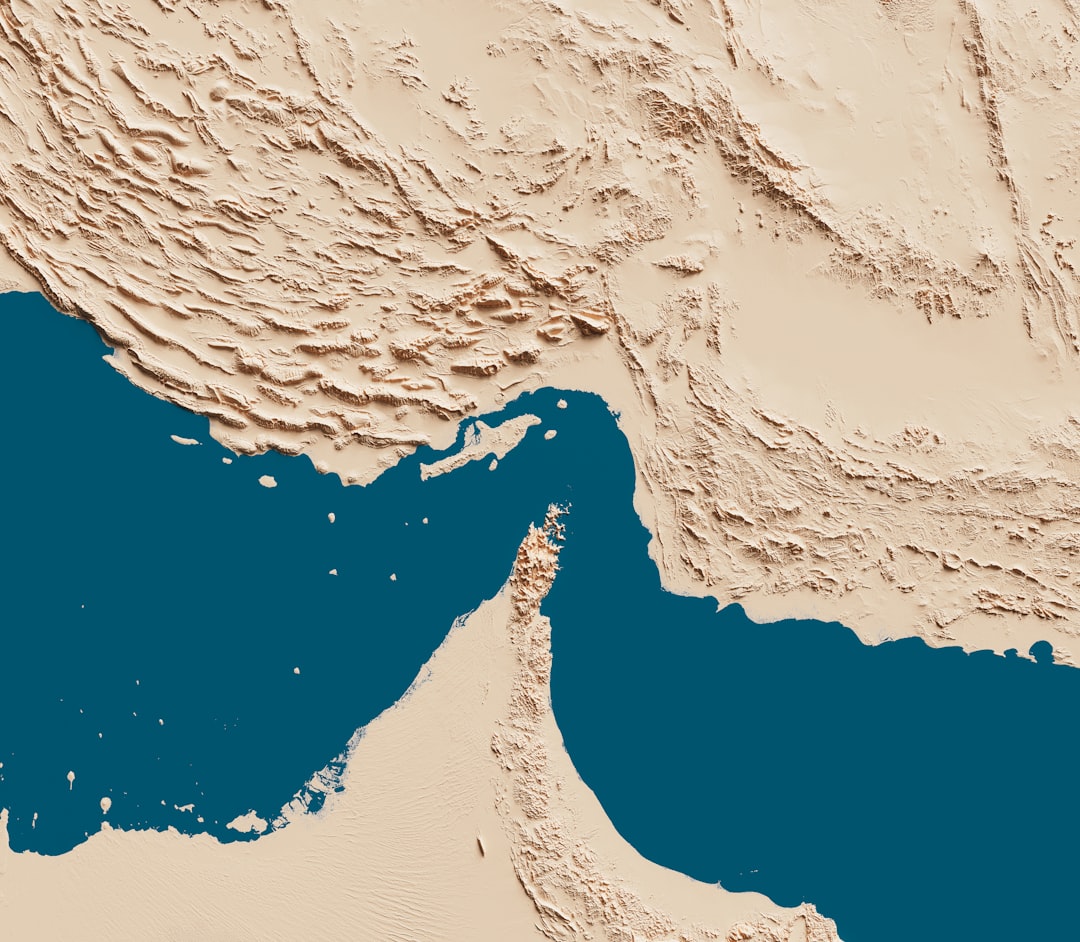
The IMF has slashed its global growth forecast amid escalating tensions around the Strait of Hormuz, sending shockwaves through energy markets and business planning worldwide. Here's what the downgrade means for startups, investors, and the broader economy — and how to respond strategically.
One-fifth of the world’s oil passes through a narrow waterway barely 21 miles wide at its tightest point. When that chokepoint faces disruption, the ripple effects don’t just touch energy markets — they rewrite the entire global economic playbook. That’s exactly the scenario unfolding right now as the IMF cuts global growth forecast during Hormuz blockade tensions, sending shockwaves through boardrooms, trading floors, and startup ecosystems alike.
In this article, we’ll break down what the IMF’s revised projections actually mean, why the Strait of Hormuz matters far more than most business leaders realize, and how entrepreneurs and investors should recalibrate their strategies in response.
Why the Strait of Hormuz Is the World’s Economic Jugular
The Strait of Hormuz sits between Iran and Oman, connecting the Persian Gulf to the Gulf of Oman and, ultimately, the open ocean. Roughly 20 to 21 million barrels of oil flow through it daily — that’s approximately 20% of global petroleum consumption.
A blockade or even a credible threat of closure doesn’t just spike crude prices. It triggers a cascade: shipping insurance premiums skyrocket, tanker rerouting adds days and cost to supply chains, and refineries dependent on Gulf crude scramble for alternatives. The last time tensions escalated significantly in the region — during the 2019 tanker attacks — Brent crude jumped nearly 15% in a single trading session.
This time, the disruption is more sustained, and the IMF has taken notice in ways that should alarm anyone building or running a business in 2025.
What the IMF’s Revised Forecast Actually Says
The International Monetary Fund’s decision to slash its global growth projections isn’t a routine adjustment. The fund typically revises forecasts in measured increments — a tenth of a percentage point here, two-tenths there. When the IMF cuts global growth forecast during Hormuz blockade conditions, it signals that the institution sees material, structural risk rather than a temporary market tantrum.
Key takeaways from the revised outlook include:
- Global GDP growth downgraded: The IMF has trimmed expectations meaningfully, reflecting both the direct energy price shock and the second-order effects on trade and consumer confidence.
- Emerging markets hit hardest: Oil-importing developing nations face a double blow — higher energy costs and tightening financial conditions as capital flows toward safe-haven assets.
- Inflation pressures reignited: Just as central banks were signaling rate-cut paths, surging energy prices threaten to push headline inflation back up, potentially delaying monetary easing.
- Trade volume contraction: Disrupted shipping lanes and elevated logistics costs are expected to compress global trade growth beyond what tariff disputes alone have caused.
For context, the IMF’s World Economic Outlook serves as the benchmark that governments, central banks, and institutional investors use to calibrate policy and allocate capital. When it moves, everything downstream shifts with it.
The Oil Price Shock: More Than Just Fuel Costs
It’s tempting to view elevated oil prices as a narrow problem — drivers pay more at the pump, airlines raise ticket prices, and life goes on. But the reality is far more interconnected.
Petroleum is embedded in virtually every supply chain on the planet. Plastics, pharmaceuticals, fertilizers, textiles, and electronics all depend on petrochemical feedstocks. When crude prices surge 25-40% over a compressed timeline, input costs spike across industries that have nothing to do with energy on the surface.
How This Plays Out for Startups and SMBs
Early-stage companies and small businesses operate with thinner margins and less pricing power than multinational corporations. A sustained energy cost shock creates several immediate challenges:
- Customer acquisition gets more expensive. When consumers and enterprises tighten budgets, cost-per-acquisition rises across digital and traditional channels.
- Logistics and fulfillment costs jump. Any startup with a physical product — from DTC brands to hardware companies — faces margin compression.
- Fundraising conditions tighten. Venture capital and growth equity investors become more cautious when macro uncertainty rises. Deal timelines extend, and valuation expectations reset.
- Currency volatility introduces new risk. Startups operating across borders face unpredictable FX movements as petrodollar flows shift and central banks respond asymmetrically.
If you’re running a business that depends on global supply chains, our coverage of IBM: How Robust AI Governance Protects Enterprise Margins offers practical frameworks for navigating exactly this kind of disruption.
Geopolitical Context: This Isn’t Happening in a Vacuum
The Hormuz blockade situation doesn’t exist in isolation. It’s layered on top of an already fragile global economic environment marked by ongoing trade tensions, technology export restrictions, and unresolved conflicts in multiple regions.
The IMF’s downgrade reflects a compounding of risks rather than a single shock. Businesses that were already dealing with tariff uncertainty and post-pandemic normalization challenges now face an energy supply crisis that could persist for weeks or months.
What makes this moment particularly treacherous is the policy bind it creates for central banks. The U.S. Federal Reserve and its counterparts in Europe and Asia had been telegraphing a path toward looser monetary policy. An oil-driven inflation spike complicates that narrative enormously — raising rates to fight inflation would choke growth further, while cutting rates could let price pressures spiral.
For a deeper understanding of how monetary policy shifts affect business planning, check out our analysis on Inside the Creative Artificial Intelligence Stack for Fashion.
Strategic Moves for Business Leaders Right Now
Uncertainty isn’t a reason to freeze — it’s a reason to act deliberately. Here’s what forward-thinking founders and executives should consider as the IMF cuts global growth forecast during Hormuz blockade conditions:
1. Stress-Test Your Financial Models
Revisit your projections with oil at $100, $120, and $140 per barrel. Understand where your breakeven shifts and what levers you have to pull. If your unit economics only work in a low-energy-cost environment, that’s a vulnerability you need to address now.
2. Diversify Supply Chain Geography
Over-reliance on suppliers routing through the Persian Gulf or dependent on Gulf-sourced raw materials is a concentration risk. Identify alternative vendors in regions less exposed to Hormuz disruption.
3. Lock In Favorable Terms Where Possible
If you can secure fixed-rate shipping contracts, pre-purchase key inputs, or hedge energy exposure through financial instruments, this is the moment to act — before prices move further.
4. Communicate Proactively With Investors
Transparency builds trust during turbulent periods. Brief your board and investors on your exposure, your mitigation plan, and how you see the macro environment affecting your roadmap. The founders who get ahead of the narrative earn credibility that pays dividends long after the crisis passes.
5. Watch for Opportunistic Plays
Market disruptions create asymmetric opportunities. Competitors who are over-leveraged or poorly diversified may stumble. Talent that was previously locked up at well-funded companies may become available. Acquisition targets may emerge at attractive valuations.
The Bigger Picture: Fragility as the New Normal
If there’s a meta-lesson in the IMF’s downgrade, it’s this: the global economy has entered an era where disruption is structural, not episodic. The past five years have delivered a pandemic, a land war in Europe, a semiconductor shortage, trade wars, banking crises, and now a critical shipping lane blockade.
Businesses that thrive in this environment won’t be the ones that predict the next shock — nobody can. They’ll be the ones that build resilience into their DNA: flexible supply chains, diversified revenue streams, conservative balance sheets, and the operational agility to pivot when conditions shift abruptly.
The IMF cutting its global growth forecast during the Hormuz blockade is a data point, not a death sentence. But it’s a data point that demands attention, action, and a willingness to plan for scenarios that felt improbable just months ago.
What’s your take? Is your business prepared for a prolonged energy disruption? Share your strategies and concerns in the comments — and subscribe for ongoing coverage as this situation develops.
Previous Post
Next Post


Advertisement