Now Reading: ContextPool: Persistent Memory for AI Coding Agents
- 01
ContextPool: Persistent Memory for AI Coding Agents
ContextPool: Persistent Memory for AI Coding Agents
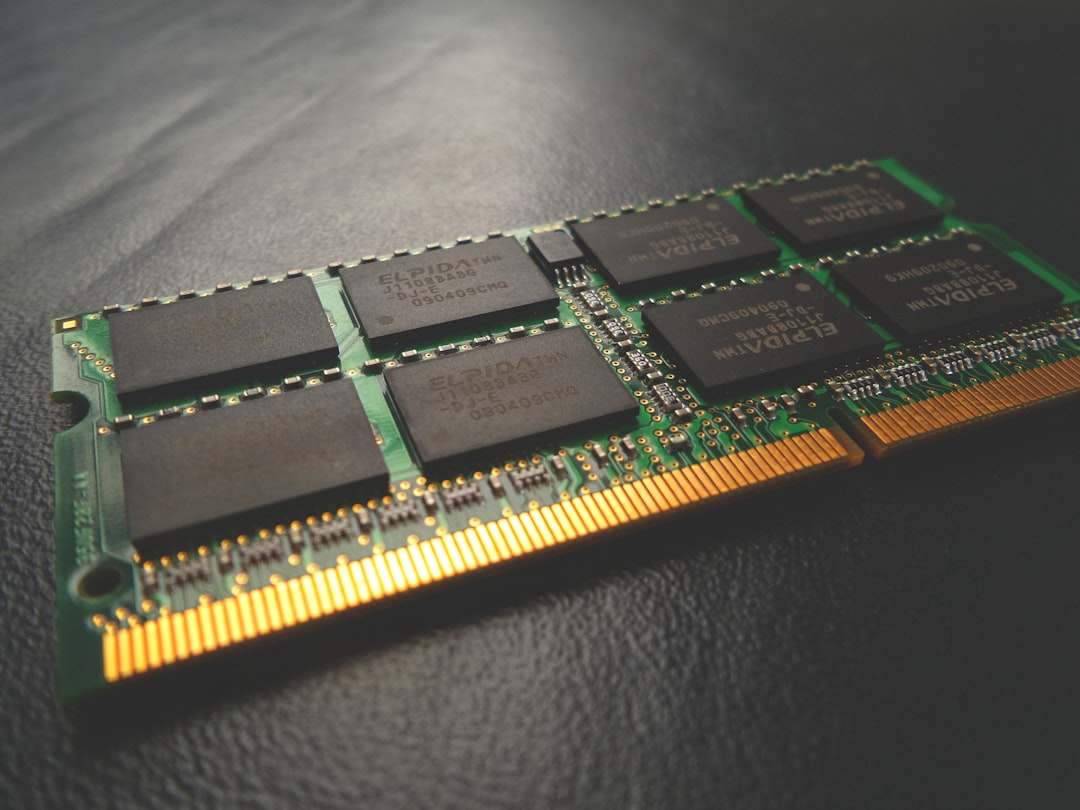
ContextPool introduces persistent memory for AI coding agents, solving the frustrating problem of context loss between sessions. The tool has sparked significant developer discussion about the future of AI-assisted software development and why memory infrastructure is becoming essential.
A New Tool Tackles One of AI Coding’s Most Frustrating Problems
Anyone who has spent meaningful time working with AI-powered coding assistants knows the pain: you spend twenty minutes carefully explaining your project’s architecture, your naming conventions, your edge cases — and then the session ends. Next time you open the tool, it’s a blank slate. All that context? Gone.
ContextPool is a newly surfaced project that aims to solve this exact problem by giving AI coding agents a persistent memory layer. The tool has sparked significant discussion in developer communities, and for good reason — it addresses a gap that has been quietly undermining the productivity gains AI coding tools promise.
What Is ContextPool and How Does It Work?
At its core, ContextPool is designed to serve as a shared, long-lived memory system for AI coding agents. Rather than treating every interaction as an isolated conversation, it allows agents to store, retrieve, and build upon context accumulated across multiple sessions and tasks.
Think of it like giving your AI pair programmer a notebook it can actually keep between meetings. The tool captures relevant project details — code patterns, architectural decisions, user preferences, past debugging sessions — and makes them available whenever an agent needs them.
Key capabilities that have emerged from early discussion include:
- Session-spanning memory: Context persists beyond a single conversation window, eliminating repetitive re-explanation.
- Structured knowledge storage: Rather than dumping raw text into a buffer, ContextPool organizes information in a way that agents can query efficiently.
- Multi-agent compatibility: Multiple AI coding agents can potentially draw from the same pool of context, enabling more coherent collaboration across tools.
- Developer-controlled scope: Users retain control over what gets remembered, updated, or forgotten — a critical feature for projects with evolving requirements.
Why This Matters Right Now
The timing of ContextPool’s emergence is no coincidence. We’re in a period where AI coding agents are rapidly evolving from simple autocomplete engines into autonomous development partners. Tools like GitHub Copilot, Cursor, Devin, and numerous open-source alternatives are pushing toward agent-like behavior — writing multi-file changes, running tests, debugging autonomously.
But there’s a fundamental bottleneck: context windows are finite, and memory is ephemeral. Even as models from OpenAI, Anthropic, and Google expand their context limits to hundreds of thousands of tokens, that capacity is consumed within a single session. There’s no native mechanism for an agent to “remember” what it learned about your codebase last Tuesday.
This limitation creates real friction. Developers report spending up to 30% of their interaction time re-establishing context that was previously shared. For complex enterprise codebases, this isn’t just annoying — it’s a significant drag on the ROI of AI tooling investments. If you’ve been exploring options in this space, our coverage of Claude Code Ultraplan: AI-Powered Codebase Planning breaks down the current landscape.
The Broader Trend: Memory as Infrastructure
ContextPool isn’t operating in a vacuum. The concept of persistent memory for AI systems has been gaining traction across the industry. OpenAI added a memory feature to ChatGPT in early 2024. Google’s Gemini has experimented with long-term context retention. Startups like Mem0 and Zep are building memory-as-a-service platforms for AI applications.
What makes ContextPool’s approach distinct is its focus specifically on coding agents. Software development generates a particular kind of context — deeply structured, interdependent, and version-sensitive — that demands more than a generic memory solution.
Consider what a coding agent needs to remember effectively:
- Project architecture: How modules relate, where boundaries exist, what patterns are preferred.
- Historical decisions: Why a certain library was chosen, what trade-offs were made, what approaches were already tried and rejected.
- Team conventions: Naming standards, testing philosophies, deployment workflows.
- Active state: What’s currently broken, what’s in progress, what the next priority is.
Generic memory systems weren’t built with this taxonomy in mind. ContextPool appears to be.
What Developers and Analysts Are Saying
The discussion around ContextPool has been notably substantive. Developer communities have zeroed in on several themes worth highlighting.
First, there’s enthusiasm about the workflow continuity this enables. Multiple developers have noted that the lack of persistent memory has been the single biggest reason they revert to manual coding for complex tasks. If an agent can’t remember what it already knows about your project, you end up micro-managing it — which defeats the purpose.
Second, there are legitimate questions about privacy and data governance. Any tool that stores detailed knowledge about a codebase raises questions about where that data lives, who can access it, and how it’s secured. Enterprise adoption will hinge on clear answers here.
Third, some observers have pointed out the potential for memory drift — situations where stored context becomes outdated or contradictory as a codebase evolves. How ContextPool handles stale information and conflicting memories will be a key differentiator. For more context on how AI tools handle data, check out our overview of Claunnector: Bridge Your Mac’s Mail & Calendar to AI.
What Comes Next
The trajectory here seems clear. As AI coding agents mature from assistants to autonomous collaborators, persistent memory transitions from a nice-to-have to essential infrastructure. We should expect to see several developments in the coming months:
- Integration with major platforms: Tools like Cursor, Windsurf, and VS Code-based agents will likely adopt or build similar memory layers.
- Standardization efforts: As multiple memory solutions emerge, expect pressure to standardize how context is stored and shared across agents and tools.
- Enterprise hardening: SOC 2 compliance, encryption at rest, role-based access controls — the usual enterprise checklist will need to be addressed before organizations trust a tool with deep codebase knowledge.
The Bottom Line
ContextPool represents something more significant than a single tool launch. It signals a maturation point in the AI coding ecosystem — the moment when the community collectively acknowledged that intelligence without memory is fundamentally limited.
For developers currently grinding through repetitive context-setting with their AI assistants, ContextPool and tools like it offer a compelling glimpse of a better workflow. The AI coding revolution has been impressive but incomplete. Persistent memory might just be the missing piece that makes these agents genuinely indispensable.
Previous Post
Next Post


Advertisement