Now Reading: NVIDIA Transformer Engine Implementation Guide: FP8 & Mixed
-
01
NVIDIA Transformer Engine Implementation Guide: FP8 & Mixed
NVIDIA Transformer Engine Implementation Guide: FP8 & Mixed
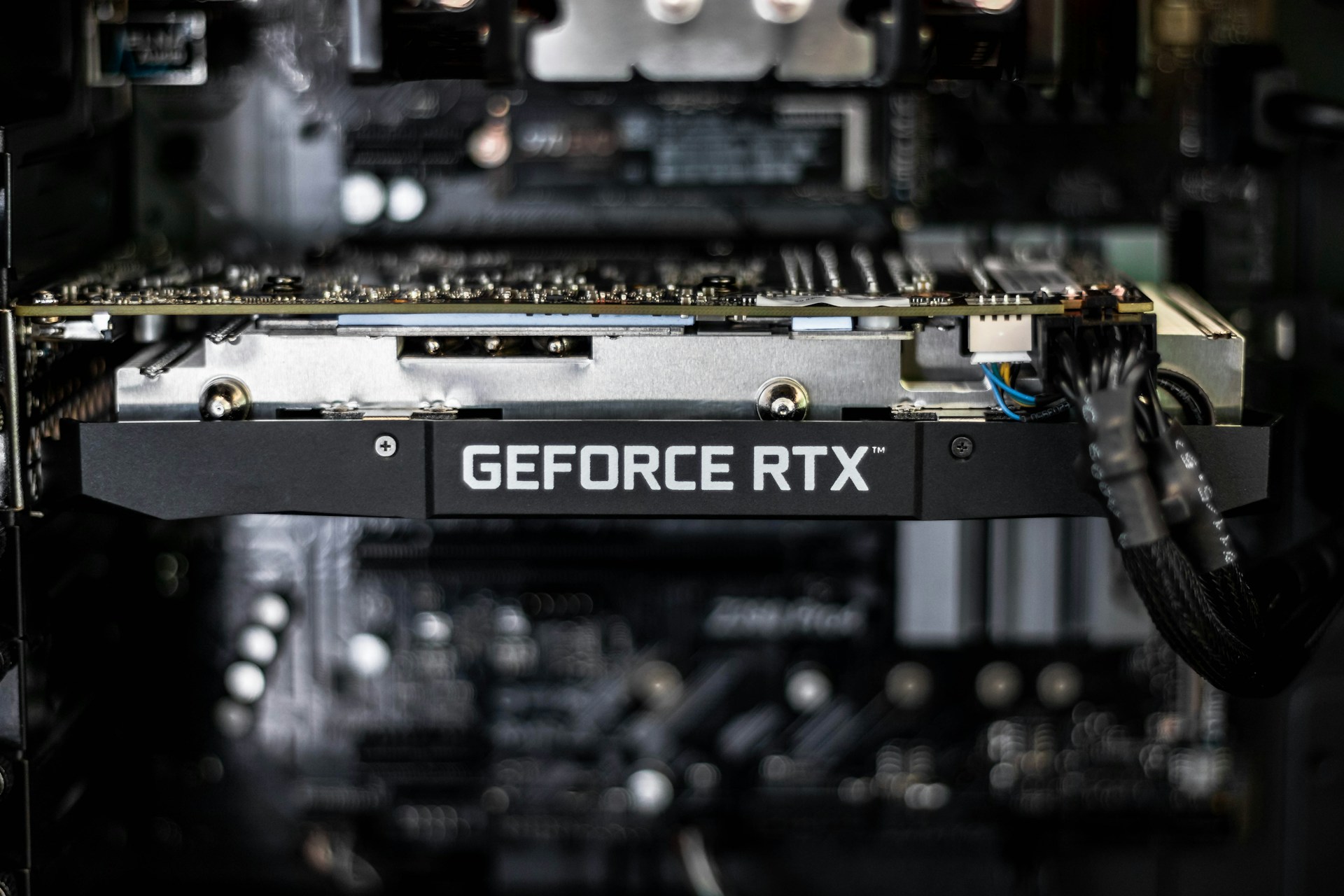
A comprehensive implementation guide demonstrates how to run NVIDIA's Transformer Engine with FP8 mixed precision, complete with GPU compatibility checks, benchmarking against standard PyTorch, and graceful fallback execution. The walkthrough provides a practical blueprint for accelerating transformer-based deep learning workflows on modern NVIDIA hardware.
A New Practical Blueprint for Accelerating Deep Learning with NVIDIA’s Transformer Engine
A detailed, end-to-end technical walkthrough has emerged showing developers exactly how to harness NVIDIA’s Transformer Engine for mixed precision training — complete with FP8 verification, performance benchmarking, graceful fallback mechanisms, and side-by-side comparisons against standard PyTorch workflows. The implementation guide addresses one of the most pressing challenges in modern AI development: squeezing maximum performance out of GPU hardware without sacrificing model accuracy or code reliability.
This matters because as large language models and transformer architectures continue to dominate the AI landscape, the gap between what cutting-edge hardware can deliver and what most practitioners actually extract from it remains stubbornly wide. This guide attempts to close that gap in a concrete, reproducible way.
What the Implementation Covers
The walkthrough is structured as a Python-based notebook that takes developers from zero to a fully functioning mixed precision training pipeline. Rather than assuming ideal conditions, the guide acknowledges real-world messiness — GPU compatibility issues, missing CUDA extensions, and environments where the full transformer engine stack simply won’t compile.
Here’s what the workflow addresses step by step:
- Environment preparation: Verifying GPU availability, CUDA readiness, and driver compatibility before any training code runs.
- Transformer Engine installation: Attempting to build and install NVIDIA’s specialized components, with intelligent error handling when compilation fails.
- Fallback execution paths: Ensuring the entire notebook remains functional even on hardware that doesn’t support FP8, defaulting to standard PyTorch operations.
- Model construction: Building both teacher and student networks to demonstrate knowledge distillation alongside precision optimization.
- Benchmarking: Measuring training speed and GPU memory consumption across both the baseline PyTorch path and the transformer engine-accelerated path.
- Visualization: Generating clear charts comparing the two approaches on throughput and resource efficiency.
Why Mixed Precision and FP8 Matter Right Now
The push toward lower numerical precision in deep learning isn’t new, but FP8 (8-bit floating point) represents a significant inflection point. NVIDIA introduced hardware-level FP8 support with its Hopper GPU architecture (H100 and beyond), promising up to twice the throughput of FP16 for transformer workloads. The Transformer Engine automatically manages precision switching between FP8 and higher-precision formats on a per-layer basis, preserving numerical stability where it counts.
For organizations training billion-parameter models, even a 20–30% reduction in training time translates to thousands of dollars saved per run. At hyperscale, those savings compound into millions. But until now, most publicly available guides either glossed over the practical difficulties of getting FP8 running or assumed access to the latest data center GPUs.
If you’re exploring how precision formats affect neural network performance, our earlier coverage on AI Startup Rocket Offers Vibe McKinsey-Style Reports at a Fraction of the cost provides useful foundational context.
The Fallback Philosophy: Pragmatic Engineering Over Perfectionism
One of the most valuable aspects of this implementation is its emphasis on graceful degradation. In production machine learning, not every machine in a cluster runs identical hardware. Research teams frequently work across a mix of consumer GPUs, cloud instances, and dedicated training nodes.
The guide wraps transformer engine calls in try-except blocks that detect whether the necessary extensions compiled successfully. If FP8 acceleration isn’t available, execution seamlessly reverts to standard PyTorch mixed precision via torch.cuda.amp. This approach means the same codebase runs everywhere — from a developer’s laptop with a GTX 1080 to an H100-equipped server.
This pattern mirrors what mature MLOps teams at companies like Meta and Google have long practiced internally: write for the ideal case, but always have a working fallback. It’s a philosophy that separates production-ready code from demo scripts.
Benchmarking Results and What They Reveal
While specific numbers vary depending on hardware and model size, the general pattern observed in transformer engine benchmarks is consistent with NVIDIA’s published claims. On Hopper-class GPUs, users typically see:
- Training throughput improvements of 25–40% compared to FP16-only mixed precision.
- Memory footprint reductions of 15–25%, allowing larger batch sizes or bigger models within the same GPU memory budget.
- Minimal accuracy degradation — usually within 0.1–0.3% of full FP32 training on standard benchmarks.
The teacher-student network setup in the guide adds another dimension: it demonstrates that precision-optimized training integrates cleanly with knowledge distillation workflows, which are increasingly popular for deploying efficient models on edge devices.
Industry Context: The Broader Precision Revolution
NVIDIA isn’t alone in pushing lower-precision arithmetic. AMD’s Instinct MI300X supports FP8, and Google’s TPU v5 family has its own approach to reduced-precision matrix operations. The competitive pressure among silicon vendors is driving rapid adoption of these techniques across the entire deep learning ecosystem.
Frameworks like PyTorch and JAX are steadily improving native support for lower-precision formats, but NVIDIA’s Transformer Engine remains the most tightly integrated solution for its own hardware. The engine hooks directly into cuBLAS and cuDNN, bypassing higher-level abstraction layers to achieve peak utilization on Ampere and Hopper GPUs.
For a broader understanding of how NVIDIA’s AI ecosystem is evolving, check out our analysis of AI Startup Rocket Offers Vibe McKinsey-Style Reports at a Fraction of the cost.
What Comes Next
Expect mixed precision workflows — especially those involving FP8 — to become the default rather than the exception within the next 12 to 18 months. As NVIDIA’s Blackwell architecture rolls out with even more aggressive low-precision capabilities, implementations like this one will serve as essential templates for teams modernizing their training pipelines.
The real signal here isn’t just about speed or memory savings. It’s about making high-performance training accessible to practitioners who don’t have dedicated CUDA engineering teams. When a single notebook can demonstrate the full lifecycle — from environment checks through benchmarking to visualization — with robust fallback paths baked in, the barrier to adoption drops significantly.
For any team currently training transformer-based models at meaningful scale, the takeaway is clear: implementing mixed precision with proper FP8 support and fallback execution isn’t a future optimization to consider — it’s a present-day competitive necessity.
Previous Post
Next Post


Advertisement