Now Reading: Microsoft AI Launches Multimodal Foundation Models: What It
-
01
Microsoft AI Launches Multimodal Foundation Models: What It
Microsoft AI Launches Multimodal Foundation Models: What It
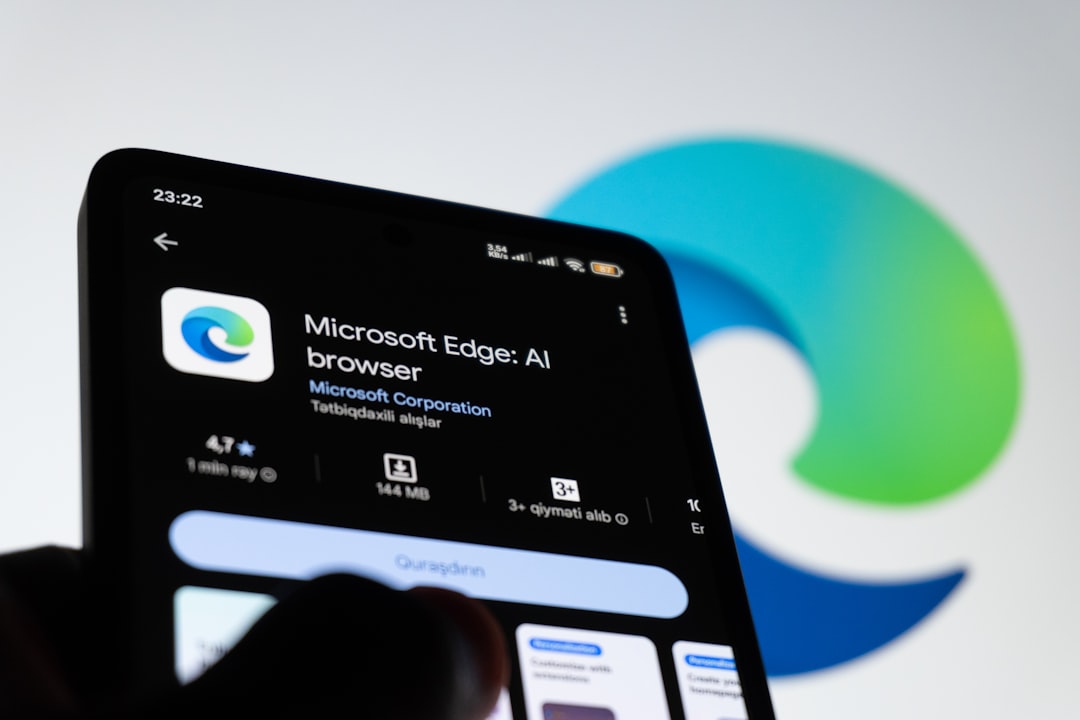
Microsoft AI launches multimodal foundation models capable of processing text, images, video, and audio simultaneously. This post explores what these models offer, why they matter for enterprises and developers, and how to start building with them today.
The Era of Single-Sense AI Is Officially Over
For years, artificial intelligence operated in silos. One model understood text. Another recognized images. A third transcribed speech. They rarely talked to each other, and when they did, the results were clunky at best. That paradigm just took a massive hit.
Microsoft AI launches multimodal foundation models that can simultaneously interpret text, images, video, and audio — processing them not as separate inputs but as interconnected streams of meaning. Think of it like upgrading from a person who can only read braille to someone who can see, hear, read, and speak all at once.
In this post, we’ll break down what these models actually do, why multimodal capability matters so much right now, and how developers, enterprises, and everyday users stand to benefit.
What Exactly Are Multimodal Foundation Models?
A foundation model is a large-scale AI system trained on vast, diverse datasets that can be adapted to a wide range of downstream tasks. GPT-4 is a foundation model. So is DALL·E. The key difference with multimodal variants is their ability to handle multiple data types within a single architecture.
Instead of chaining separate models together — feeding an image into one system, extracting a description, then piping that text into another — a multimodal foundation model digests everything in one pass. It understands the relationship between a photograph of a flooded street and a news headline about a hurricane without needing a human to manually connect the dots.
Why “Foundation” Matters
The word “foundation” isn’t marketing fluff. These models serve as base layers that organizations can fine-tune for specific purposes:
- Healthcare: Analyzing radiology scans alongside physician notes to flag anomalies.
- Retail: Matching product images with customer reviews to improve search relevance.
- Manufacturing: Combining camera feeds with sensor data to predict equipment failures before they happen.
The foundation approach means companies don’t need to build from scratch. They build on top of something already deeply capable.
What Microsoft Brings to the Table
Microsoft’s investment in this space didn’t materialize overnight. The company has poured billions into AI infrastructure, partnered deeply with OpenAI, and steadily expanded Azure’s machine learning toolkit. Now, with the release of these new multimodal foundation models, they’re offering something that feels distinctly different from competitors.
Key Capabilities Worth Noting
- Unified vision-language understanding: These models can look at a chart, read its labels, and answer complex questions about trends — all without OCR preprocessing.
- Grounded generation: Rather than hallucinating responses, the models anchor their outputs in the actual visual or auditory content they receive.
- Scalable deployment via Azure: Enterprise teams can access these models through Azure AI Services, which means integration with existing cloud infrastructure is relatively painless.
- Customization through fine-tuning: Organizations can adapt the base models to domain-specific tasks using their own proprietary data, preserving the general intelligence while sharpening specialized performance.
This combination of raw capability and practical deployment options is what separates a research paper from a usable product.
Why This Shift Matters More Than You Think
Here’s an analogy that might help. Early smartphones had a camera, a browser, a phone app, and a music player — but they barely interacted. You couldn’t snap a photo of a restaurant menu and instantly get translated recommendations. Today, that’s trivial. Multimodal AI is experiencing the same integration moment.
When Microsoft AI launches multimodal foundation models at this scale, it signals that the industry is moving past “impressive demos” and into territory where real workflows change. Consider the implications:
- Customer support agents could receive a screenshot from a frustrated user and instantly understand both the visual error and the text complaint, generating a resolution in seconds.
- Legal teams could upload scanned contracts alongside negotiation emails, and the model could highlight discrepancies between what was discussed and what was signed.
- Educators could feed a model a textbook diagram and a student’s written answer, receiving instant feedback on whether the student correctly interpreted the visual information.
These aren’t hypothetical futures. The technical plumbing now exists. Adoption is the remaining variable.
How Developers Should Prepare
If you’re building AI-powered products, the arrival of accessible multimodal models changes your strategic calculus. Here are practical steps to consider right now:
- Audit your data pipelines. Multimodal models thrive on diverse inputs. If your systems currently discard images, audio, or metadata, start preserving them. Richer input yields richer output.
- Experiment with Azure AI Studio. Microsoft has made it straightforward to test these models in a sandbox environment. Spin up a proof-of-concept before committing engineering resources.
- Rethink your UX. If your application only accepts text input, you’re leaving capability on the table. Consider allowing users to paste screenshots, upload photos, or record voice notes as alternative interaction modes.
- Invest in evaluation frameworks. Multimodal outputs are harder to assess than text-only responses. Build rubrics that measure accuracy across every modality your application touches.
The Competitive Landscape Is Heating Up
Microsoft isn’t operating in a vacuum. Google’s Gemini models have pushed multimodal boundaries aggressively. Meta’s open-source contributions through LLaMA variants have democratized access. Amazon is weaving multimodal understanding into Alexa and AWS Bedrock.
What distinguishes Microsoft’s approach is its enterprise-first philosophy. While others optimize for consumer-facing wow factor, Microsoft consistently asks: “Can a Fortune 500 company deploy this securely, at scale, next quarter?” That pragmatism resonates with the buyers who actually write seven-figure cloud contracts.
The competitive pressure also benefits everyone. As each major player raises the bar, model quality improves, prices drop, and developers get better tooling. It’s a rising tide scenario — at least for now.
What This Means for the Broader AI Trajectory
Zooming out, the fact that Microsoft AI launches multimodal foundation models with enterprise-grade backing tells us something important about where the industry is heading. We’re moving from AI as a novelty to AI as infrastructure — invisible, embedded, and expected.
Within two to three years, asking whether a model supports multiple modalities will feel as odd as asking whether a smartphone has a color screen. It will simply be the default.
The organizations that start building multimodal workflows today — even imperfect ones — will have a compounding advantage over those that wait for perfection. The learning curve is real, but so is the cost of inaction.
Final Thoughts: Start Experimenting Now
If there’s one takeaway from this development, it’s this: the barrier between different types of information is dissolving, and the tools to exploit that convergence are now commercially available.
Whether you’re a solo developer prototyping a weekend project or a CTO mapping out next year’s AI roadmap, multimodal foundation models deserve your attention today — not next quarter. Explore the Azure AI documentation, run some experiments, and start imagining what your products look like when they can truly see, read, and listen all at once.
The future of AI isn’t just smarter. It’s more perceptive. And that changes everything.
Previous Post
Next Post

Advertisement