Now Reading: Dow Closes Lower as Trump Comments Dampen Traders’ Mood
-
01
Dow Closes Lower as Trump Comments Dampen Traders’ Mood
Dow Closes Lower as Trump Comments Dampen Traders’ Mood
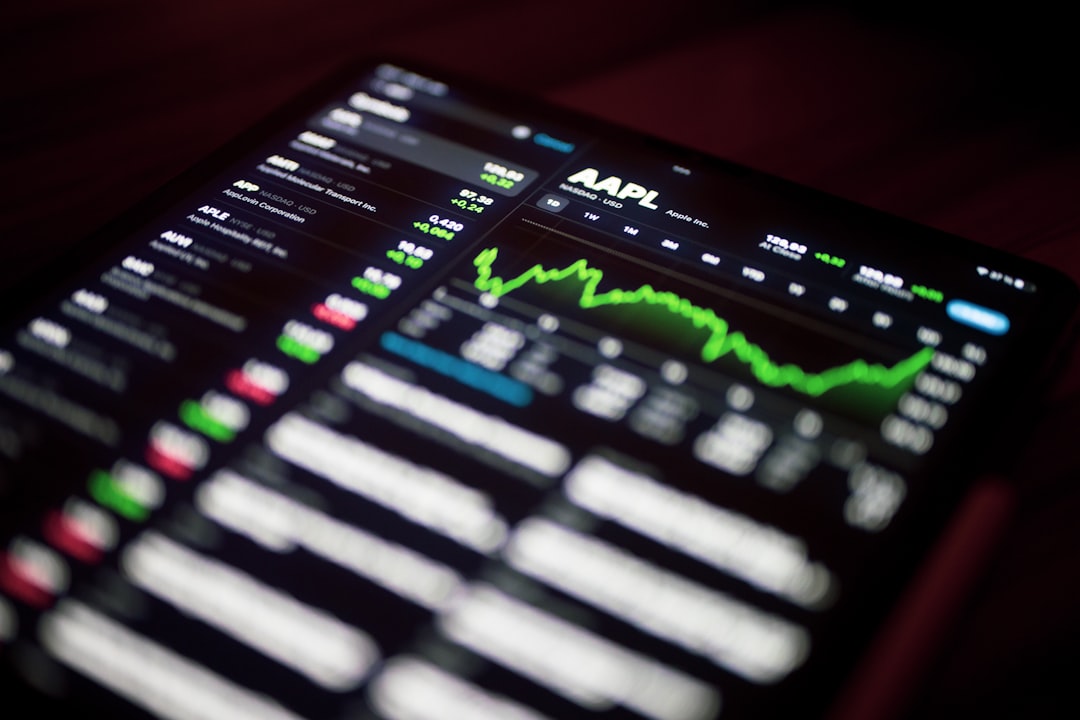
When presidential remarks trigger market declines, the media community faces a unique challenge in covering the story responsibly. This post explores why political rhetoric moves the Dow, how media amplification shapes investor behavior, and what journalists and communicators should keep in mind during these high-stakes moments.
When a Single Statement Moves Billions
It takes roughly 280 characters — or sometimes just a few seconds at a press conference podium — to send shockwaves through global financial markets. When the Dow closes lower as Trump comments dampen traders, it reveals something profound about the fragile relationship between political communication and investor psychology.
For media professionals, this intersection of politics, finance, and public communication represents one of the most consequential storytelling challenges of our era. Understanding how presidential remarks translate into market swings isn’t just a finance story — it’s a media literacy imperative.
In this post, we’ll dissect why political rhetoric carries such outsized influence on equity markets, how the media ecosystem amplifies these effects, and what communicators and journalists should keep in mind when covering these events.
The Mechanics Behind Market Sensitivity to Political Speech
Financial markets are, at their core, massive prediction machines. Every trade represents a bet on the future — future earnings, future policy, future stability. When a sitting president makes unexpected comments about tariffs, trade wars, interest rates, or regulatory crackdowns, traders must instantly recalibrate those predictions.
Think of it like a chess match where one player suddenly changes the rules mid-game. Professional traders don’t have the luxury of waiting for clarity. They must act on incomplete information, and that urgency often manifests as selling pressure.
Why the Dow Is Especially Reactive
The Dow Jones Industrial Average tracks only 30 large-cap stocks, making it more susceptible to sector-specific shocks than broader indices like the S&P 500. A pointed comment about pharmaceutical pricing can drag down UnitedHealth and Johnson & Johnson, which carry heavy weighting in the index. A remark about tariffs on imported steel immediately impacts Caterpillar and Boeing.
This concentrated structure means the Dow often amplifies the headline effect of political commentary, which in turn generates more media coverage — creating a feedback loop that media professionals should recognize and contextualize.
How Media Amplification Shapes the Narrative
Here’s where the media community plays a pivotal role. When the Dow closes lower as Trump comments dampen traders, the story doesn’t end with the closing bell. Cable news chyrons, social media posts, push notifications, and podcast hot takes all compound the psychological impact.
Consider the amplification chain:
- Stage 1: The president makes a remark — perhaps offhand, perhaps calculated — during a press availability or on social media.
- Stage 2: Financial wire services like Bloomberg and Reuters immediately publish alerts, and algorithmic trading systems parse the language for sentiment signals.
- Stage 3: Cable networks and digital outlets begin live coverage, often using dramatic language (“markets plunge,” “Wall Street rattled”) that further stokes anxiety.
- Stage 4: Retail investors, seeing the headlines on their phones, make emotional decisions — selling positions or halting planned purchases.
- Stage 5: The next morning’s coverage either reinforces fear or begins the recovery narrative, setting the tone for the following trading session.
Each stage involves editorial choices. The words journalists select, the experts they interview, and the context they provide — or fail to provide — directly influence public perception and, by extension, market behavior.
Historical Patterns Worth Examining
This phenomenon isn’t new, but its velocity has accelerated dramatically. During previous administrations, market-moving presidential communications typically came through formal channels — scheduled speeches, official policy papers, structured press conferences. Traders had time to digest and analyze.
The modern era introduced something fundamentally different: real-time, unfiltered presidential communication broadcast directly to millions. A single social media post about a specific company or sector could wipe out — or add — billions in market capitalization within minutes.
Notable Examples of Rhetoric-Driven Volatility
- Trade war escalation remarks (2018-2019): Comments about imposing or increasing tariffs on Chinese goods repeatedly triggered multi-hundred-point Dow swings, with some sessions seeing intraday reversals of over 800 points.
- Federal Reserve criticism: Public pressure on the Federal Reserve chairman to lower interest rates created uncertainty about central bank independence — a foundational principle that markets rely on for stability.
- Individual company callouts: Direct criticism of specific corporations’ pricing, manufacturing locations, or government contracts caused immediate stock price drops, raising questions about the appropriate boundaries of presidential economic commentary.
What Media Professionals Should Consider
If you work in journalism, public relations, or content creation within the financial media space, the moments when the Dow closes lower as Trump comments dampen traders present both responsibility and opportunity.
Responsible Reporting Practices
- Provide proportional context. A 200-point Dow decline sounds alarming, but on a 40,000-point index, it represents roughly 0.5%. Always include percentage moves alongside point moves.
- Distinguish between correlation and causation. Markets move for dozens of reasons simultaneously. Attributing an entire session’s decline to a single comment oversimplifies complex dynamics.
- Interview diverse sources. Don’t rely solely on Wall Street strategists. Academic economists, behavioral finance experts, and independent analysts can offer perspectives that challenge conventional narratives.
- Resist sensationalism. Words like “crash,” “plunge,” and “meltdown” should be reserved for genuinely historic events, not routine volatility.
Strategic Communication Insights
For PR professionals and corporate communicators, these volatile moments require prepared response protocols. Companies directly named in political commentary need rapid-response strategies that reassure investors without escalating the political dimension.
Having pre-approved holding statements, designated spokespeople, and clear escalation procedures can mean the difference between a contained incident and a prolonged stock decline.
The Bigger Picture: Markets as a Mirror of Trust
Ultimately, what these episodes reveal is that markets are fundamentally built on trust — trust in institutions, in policy consistency, in the predictability of the economic environment. When political rhetoric introduces uncertainty, it erodes that trust temporarily, and prices adjust accordingly.
For the media community, this means our work carries genuine economic consequences. The stories we tell about market movements shape public confidence, influence retirement account decisions for millions of ordinary people, and contribute to the broader economic climate.
That’s not a burden to fear — it’s a responsibility to embrace with rigor, nuance, and integrity.
Key Takeaways for Your Practice
Whether you’re a journalist covering financial markets, a social media strategist for a financial brand, or a content creator in the business media space, keep these principles close:
- Speed matters, but accuracy matters more. Being first with wrong context is worse than being second with the right analysis.
- Educate your audience. Use volatile moments as teaching opportunities — explain how markets work, why they react to political signals, and what historical patterns suggest.
- Monitor the feedback loop. Recognize that your coverage itself becomes part of the market narrative. Report with that awareness.
- Build institutional knowledge. Maintain a running archive of how political commentary has affected markets so you can provide instant historical context in breaking situations.
The relationship between presidential communication and market performance will remain one of the defining stories of our time. As media professionals, we owe it to our audiences — and to the broader economy — to tell that story with the sophistication it demands.
Previous Post
Next Post


Advertisement