Now Reading: Firecrawl Launches /monitor to Track Web Changes for AI
- 01
Firecrawl Launches /monitor to Track Web Changes for AI
Firecrawl Launches /monitor to Track Web Changes for AI
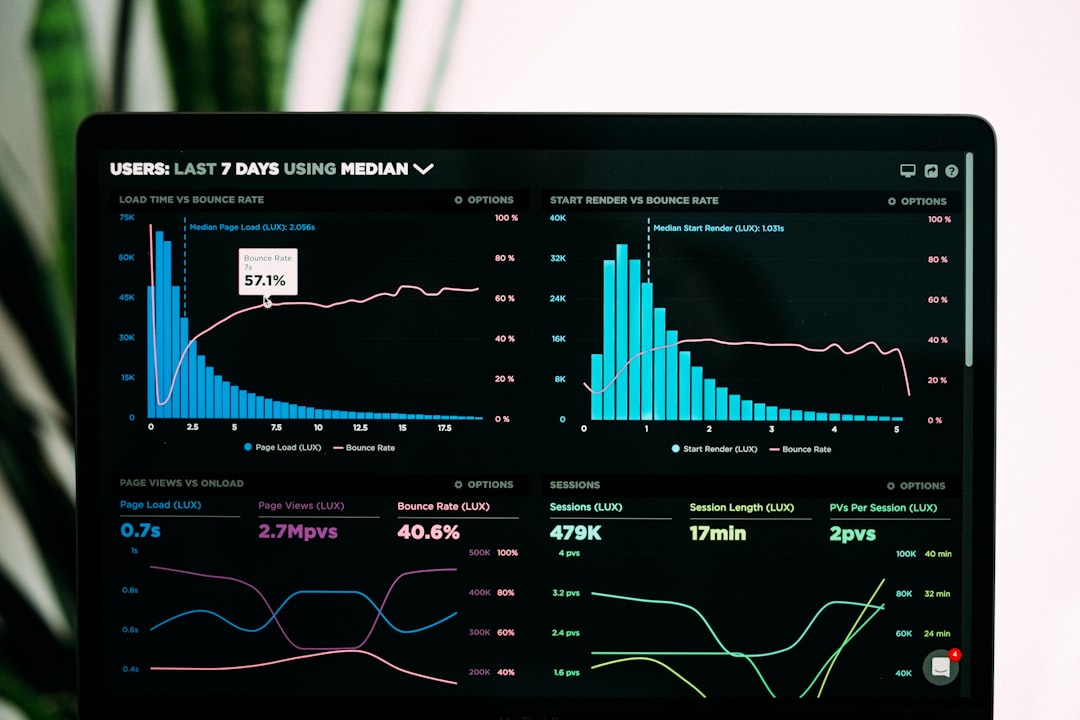
Firecrawl has launched /monitor, a new feature that enables AI agents to receive real-time notifications when web content changes. The tool addresses a critical gap in autonomous AI infrastructure, allowing developers to build agents that respond proactively to evolving online information.
Firecrawl Unveils /monitor: Real-Time Web Change Detection for AI Agents
Firecrawl, the developer-focused web scraping and crawling platform, has rolled out a compelling new capability called /monitor — a feature designed to watch websites for changes and automatically alert AI agents when something shifts. The launch has already sparked significant discussion among developers and AI practitioners looking for smarter ways to keep their autonomous systems informed.
In a landscape where AI agents are increasingly expected to act on real-time information, /monitor addresses a fundamental gap: how does an autonomous system know when the data it depends on has been updated?
What Exactly Does /monitor Do?
At its core, Firecrawl’s /monitor endpoint allows developers to set up persistent watchers on specific web pages or entire domains. When the content on those pages changes — whether it’s a price update, a new blog post, altered product specifications, or a regulatory filing — the system can notify an AI agent so it can take the appropriate next step.
Think of it as a bridge between the static snapshot model of traditional web scraping and the dynamic, event-driven architecture that modern AI applications demand. Rather than polling a website on a fixed schedule and comparing results manually, /monitor handles the heavy lifting.
Key capabilities include:
- Continuous page surveillance: Set a URL or set of URLs and let Firecrawl monitor them for meaningful content differences.
- Smart change detection: Rather than flagging every trivial DOM shift, the system focuses on substantive content changes that matter to downstream workflows.
- Agent-ready notifications: When a change is detected, structured alerts can be pushed directly to an AI agent, webhook, or automation pipeline.
- API-first design: Like the rest of Firecrawl’s product suite, /monitor is built for developers, with clean endpoints and straightforward integration patterns.
Why This Matters for the AI Agent Ecosystem
The timing of this release is no accident. The AI industry is in the middle of a massive shift from simple chatbot interfaces to fully autonomous agents capable of executing multi-step tasks without human supervision. Companies like OpenAI, Anthropic, and Google DeepMind are all pushing the boundaries of what agents can accomplish.
But there’s a critical bottleneck: most agents operate on stale data. They retrieve information at a single point in time, reason about it, and act — without any awareness of whether that information has since changed. This creates reliability problems that compound in high-stakes use cases like financial monitoring, competitive intelligence, and compliance tracking.
Firecrawl’s /monitor feature directly tackles this problem. By enabling agents to receive real-time signals about web changes, it transforms them from reactive tools into proactive systems that can respond to the world as it evolves. For teams building Robinhood Agentic Trading: AI Agents Can Now Trade For You, this is a significant infrastructure upgrade.
Background: Firecrawl’s Growing Toolkit
For those unfamiliar with the platform, Firecrawl has been steadily building a reputation as one of the most developer-friendly web data extraction tools on the market. Originally focused on crawling and scraping, the company has expanded its API to include features like structured data extraction, LLM-ready content formatting, and now real-time monitoring.
The platform occupies an interesting niche. Unlike legacy scraping tools that were built for SEO professionals or data analysts, Firecrawl has positioned itself squarely within the AI application stack. Its output is optimized for large language models — clean markdown, structured JSON, and minimal noise — which makes it a natural fit for agent architectures.
The /monitor launch represents a logical evolution. Once you’ve built a tool that helps agents read the web, the next question is obvious: how do you help agents watch the web?
Developer Discussion and Early Reactions
The announcement has generated an active discussion within developer communities, with practitioners weighing in on use cases, technical implementation details, and potential limitations. Several themes have emerged from the early conversation:
- Competitive intelligence automation: Multiple developers noted the potential for monitoring competitor pricing pages, feature announcements, and job postings as leading indicators of strategic direction.
- Regulatory and compliance tracking: Teams working in finance and healthcare expressed interest in using /monitor to watch government agency pages for policy updates and then routing those changes to specialized agents for interpretation.
- Content curation at scale: Publishers and media companies could use the feature to track source material across dozens of sites simultaneously, with agents summarizing and prioritizing new developments.
Some participants in the discussion also raised important questions about rate limiting, cost structure, and how granularly developers can control what constitutes a “meaningful” change versus background noise. These are the kinds of details that will likely determine adoption velocity.
The Broader Trend: Infrastructure for Agentic AI
Firecrawl’s /monitor arrives at a moment when the AI industry is rapidly building out the infrastructure layer that autonomous agents need to function reliably. We’ve seen similar moves from companies across the stack — from LangChain providing orchestration frameworks to vector database providers handling long-term memory.
Web awareness is the next frontier. An agent that can’t perceive changes in its environment is fundamentally limited. /monitor represents one of the first purpose-built tools to solve this specific problem, and it’s likely we’ll see competitors and complementary solutions emerge quickly.
If you’re exploring how to build more responsive autonomous systems, our coverage of TrackNotch: LLM Usage Tracking That Lives in Your Mac Notch provides additional context on the broader tooling landscape.
What to Watch Next
Several developments are worth tracking in the coming months. First, expect Firecrawl to refine the /monitor feature based on developer feedback — filtering controls, notification customization, and integration with popular agent frameworks like CrewAI and AutoGen are all logical next steps.
Second, keep an eye on how major AI agent platforms respond. If real-time web monitoring becomes a standard expectation for agent infrastructure, we could see this functionality absorbed into larger platforms or offered as a native integration by cloud providers.
Finally, the privacy and ethical dimensions deserve attention. Persistent web monitoring at scale raises questions about terms of service compliance, server load, and responsible use — conversations the industry will need to have as these tools mature.
The Bottom Line
Firecrawl’s /monitor feature is a smart, well-timed addition to the AI tooling ecosystem. By giving developers a clean way to notify their agents when web content changes, it addresses one of the most practical gaps in autonomous AI architecture. For teams building agents that need to stay current with the real world — not just a cached snapshot of it — this is a tool worth evaluating immediately.
Previous Post
Next Post
Advertisement