Now Reading: Robinhood Agentic Trading: AI Agents Can Now Trade For You
- 01
Robinhood Agentic Trading: AI Agents Can Now Trade For You
Robinhood Agentic Trading: AI Agents Can Now Trade For You
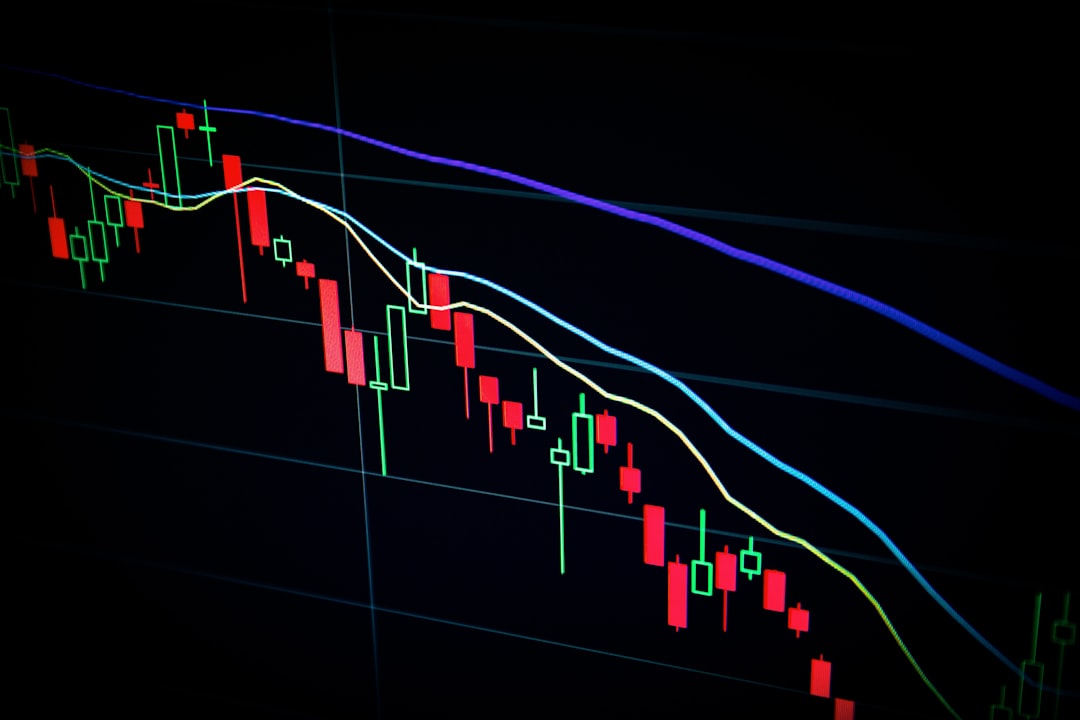
Robinhood is pushing into agentic trading, enabling AI agents to autonomously execute trades on behalf of users. The move signals a major shift in retail investing, raising both excitement and serious questions about risk, regulation, and the future of autonomous finance.
Robinhood Opens the Door to AI-Powered Agentic Trading
Robinhood, the commission-free brokerage that disrupted retail investing a decade ago, is now stepping into one of the most ambitious frontiers in fintech: agentic trading. The concept is deceptively simple — allow an autonomous AI agent to execute trades on a user’s behalf — but the implications for the financial industry are enormous.
The move has sparked a lively discussion across developer communities and financial circles, with some hailing it as the logical next step for democratized finance and others raising serious questions about risk, accountability, and market stability.
What Exactly Is Agentic Trading?
Agentic trading refers to the use of AI-powered agents that can autonomously make investment decisions and carry out transactions without direct human input for each action. Unlike traditional algorithmic trading, which follows rigidly pre-programmed rules, an agentic system can reason, adapt, and act based on evolving market conditions.
Think of it this way: a conventional trading bot might buy a stock when it drops below a set price. An agentic trader, however, could analyze breaking news, interpret earnings reports, evaluate sentiment on social media, and then decide whether that price drop represents a buying opportunity or a warning sign — all on its own.
Key characteristics of agentic trading systems include:
- Autonomous decision-making: The agent interprets data and acts without waiting for explicit user commands.
- Goal-oriented behavior: Users define objectives (e.g., “grow my portfolio by 10% this quarter”), and the agent figures out how to pursue them.
- Continuous learning: The agent can refine its strategies based on outcomes and shifting market dynamics.
- API-level integration: Agents connect directly to brokerage platforms like Robinhood to execute real trades in real time.
Why Robinhood’s Move Matters
Robinhood has built its brand on removing barriers for everyday investors. From eliminating trading commissions to simplifying the user interface, the company has consistently pushed to make Wall Street accessible to Main Street. Agentic trading represents the next logical evolution of that mission.
By enabling AI agents to interact with its platform, Robinhood is positioning itself at the intersection of two of the most powerful trends in technology: generative AI and autonomous software agents. This isn’t just about convenience — it’s about fundamentally rethinking who (or what) makes investment decisions.
The timing is also significant. Major tech companies are racing to build agentic AI capabilities. OpenAI, Google, and Microsoft have all signaled that autonomous agents represent the next phase beyond chatbots. Robinhood’s entry into this space suggests that finance will be one of the first real-world domains where agentic AI gains serious traction. If you’re interested in how this trend is unfolding, check out our coverage of MashuPack: Turn Codebases Into Clean Files for AI Models.
The Broader Context: AI Agents Are Everywhere
Robinhood isn’t operating in a vacuum. The broader tech ecosystem has been moving aggressively toward agentic systems throughout 2024 and into 2025. Autonomous agents are being deployed in customer service, software development, research, and now financial trading.
Companies like Anthropic, with its Claude model, and OpenAI, with its GPT-based agent frameworks, have laid the groundwork for software that doesn’t just respond to prompts but takes initiative. In the financial sector specifically, hedge funds and institutional traders have used algorithmic strategies for years. What’s different now is that these capabilities are being handed to retail investors through platforms they already use.
This democratization mirrors what happened with stock trading itself. When Robinhood launched in 2013, institutional investors scoffed at the idea of zero-commission trades. Today, nearly every major brokerage offers them. If agentic trading follows a similar trajectory, we could see AI-managed portfolios become as common as index fund investing within a few years.
The Risks and the Discussion They’re Generating
Not everyone is enthusiastic. The discussion surrounding Robinhood’s agentic trading capabilities has surfaced several legitimate concerns:
- Accountability gaps: If an AI agent makes a catastrophic trade, who bears the responsibility — the user, the platform, or the agent’s developer?
- Market volatility: If thousands of autonomous agents react to the same market signal simultaneously, the resulting cascade of trades could amplify volatility in unpredictable ways.
- Security vulnerabilities: Granting an AI agent access to execute financial transactions introduces new attack surfaces for bad actors.
- Regulatory uncertainty: The SEC and other regulatory bodies have not yet established clear frameworks for AI-driven autonomous trading at the retail level.
These are not hypothetical issues. Flash crashes triggered by algorithmic trading systems have occurred multiple times in the past, and those involved far more constrained software than what modern agentic AI systems are capable of doing.
What Industry Experts Are Saying
Financial technology analysts have offered a nuanced view. The consensus seems to be that agentic trading is inevitable, but guardrails are essential. Many experts draw parallels to the early days of self-driving cars — the technology is promising, but the consequences of failure are high enough to demand caution.
Some analysts believe Robinhood’s approach could actually set a positive precedent if the company implements robust safety mechanisms, such as spending limits, trade approval thresholds, and real-time monitoring dashboards that let users oversee their agent’s activity. Others argue that the very nature of an autonomous agent conflicts with the principle of informed consent that underpins securities regulation.
For a deeper look at the AI tools reshaping personal finance, explore our roundup of Compartment: The Open Source Runtime for Internal Teams.
What Comes Next
Robinhood’s exploration of agentic trading is likely just the beginning. Here’s what to watch for in the coming months:
- API expansion: Expect Robinhood to gradually expand the capabilities available to third-party agents, potentially including options trading, crypto, and portfolio rebalancing.
- Competitor response: Platforms like Webull, E*TRADE, and Schwab will face pressure to offer similar capabilities or risk losing a tech-forward user base.
- Regulatory action: The SEC and FINRA will almost certainly weigh in, potentially issuing guidance or new rules specifically addressing agent-driven trading.
- Open-source agent ecosystems: Developer communities are likely to build and share trading agents, creating an ecosystem reminiscent of the early app store era.
The Bottom Line
Robinhood’s move into agentic trading is a signal that autonomous AI is no longer a research project — it’s becoming a consumer product. The ability to delegate investment decisions to an intelligent agent could be transformative for millions of retail investors who lack the time, expertise, or emotional discipline to trade effectively on their own.
But with that power comes significant risk. The discussion happening right now — among developers, regulators, and investors — will shape how this technology evolves. Whether agentic trading becomes the next great equalizer in finance or the next source of systemic risk depends entirely on how thoughtfully it’s implemented.
One thing is certain: the era of letting your AI agent trade for you has officially arrived. And Robinhood, once again, is leading the charge.
Previous Post
Next Post

Advertisement