Now Reading: Anthropic’s Refusal to Arm AI Is Exactly Why the UK Wants It
- 01
Anthropic’s Refusal to Arm AI Is Exactly Why the UK Wants It
Anthropic’s Refusal to Arm AI Is Exactly Why the UK Wants It
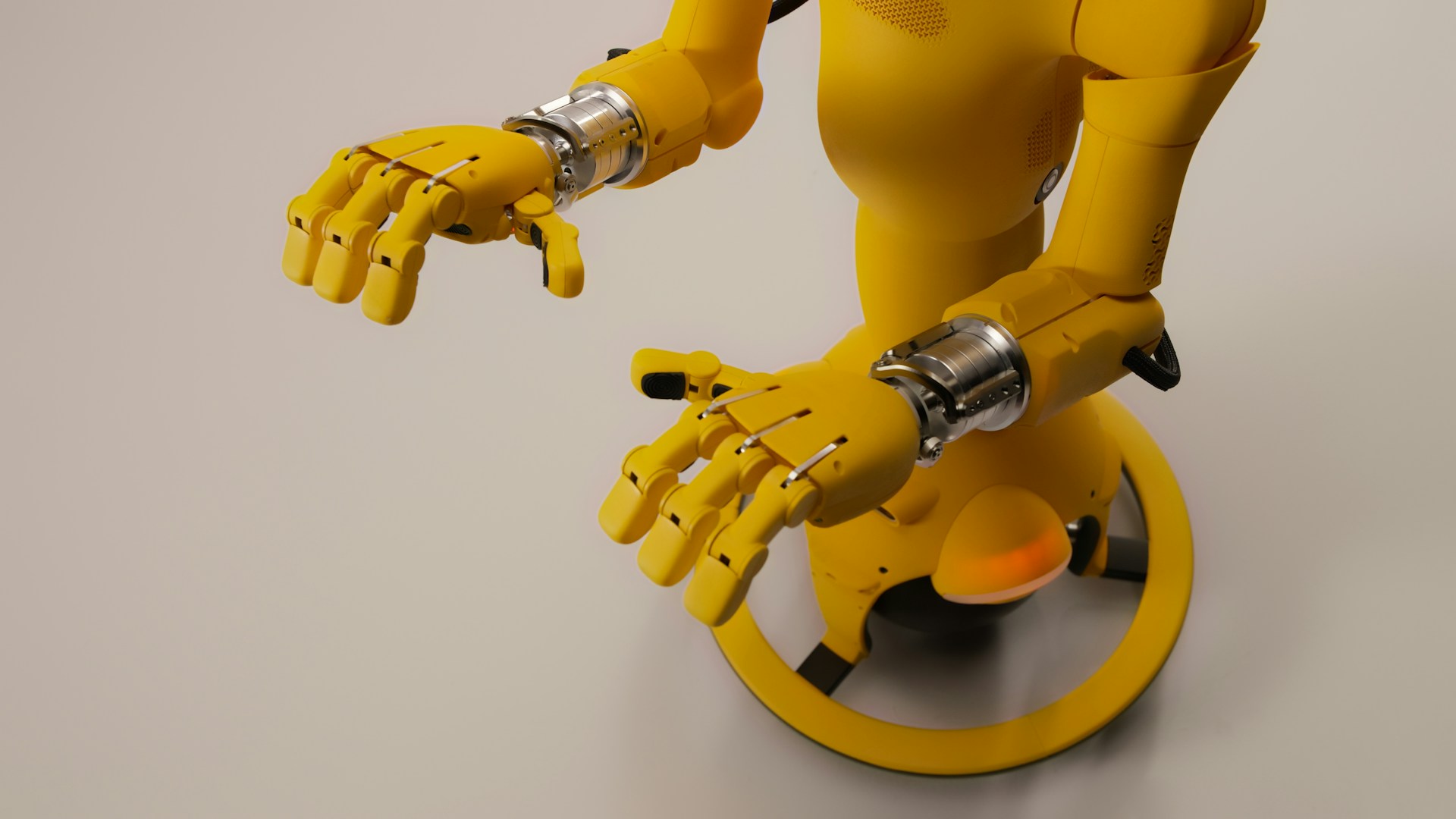
After Anthropic CEO Dario Amodei refused a Pentagon demand to remove safety guardrails from Claude for autonomous weapons and surveillance, the Trump administration cut all federal ties with the company. The UK seized the moment, welcoming Anthropic as a centerpiece of its responsible AI strategy — proving that ethical principles can become a powerful competitive advantage.
A Principled Stand That Redrew the Geopolitical AI Map
In a remarkable turn of events that has reshaped the global artificial intelligence landscape, Anthropic — the San Francisco-based AI safety company behind the Claude assistant — has become the centerpiece of a transatlantic tug-of-war over the ethics of deploying AI in military and surveillance contexts. After refusing a direct demand from the US Defense Department to strip safety guardrails from its technology, the company found itself blacklisted by the Trump administration and embraced by the United Kingdom.
The story is not simply about one company choosing principles over profit. It is about what happens when a superpower tries to coerce a technology firm into crossing ethical red lines — and another nation steps in to reward that defiance.
What Happened: The Ultimatum and Its Fallout
In late February 2025, US Defense Secretary Pete Hegseth reportedly delivered an unambiguous demand to Anthropic CEO Dario Amodei: eliminate the safeguards that prevent Claude from being deployed in fully autonomous weapons systems and domestic mass surveillance programs. The request represented an extraordinary escalation — asking a private company to actively enable capabilities that most AI ethicists consider existential risks.
Amodei refused. In a public statement, he explained that Anthropic could not participate in uses of artificial intelligence that risk undermining the democratic values the technology should protect. It was a position entirely consistent with the company’s founding mission, but the political consequences were immediate and severe.
President Trump responded by ordering every federal agency to halt all use of Anthropic’s technology. Pentagon contracts evaporated. The message to the broader AI industry was unmistakable: compliance or exile.
Why the UK Moved Quickly
For the British government, Anthropic’s sudden estrangement from Washington represented a once-in-a-generation opportunity. The UK has spent years positioning itself as a global hub for responsible AI development — hosting the landmark AI Safety Summit at Bletchley Park in November 2023 and establishing the AI Safety Institute. But ambitions alone do not build an industry. You need companies, talent, and intellectual capital.
Anthropic checks every box. The company is widely regarded as one of the top 3 frontier AI labs on the planet, alongside OpenAI and Google DeepMind. Its research team includes some of the most cited names in machine learning safety. And now, thanks to Washington’s heavy-handedness, it was looking for a friendlier home.
The UK’s pitch was straightforward: we will not force you to weaponize your models. In fact, we want you precisely because you refused to do so. For a deeper look at how nations are competing for AI leadership, see our coverage of RightNow AI Launches AutoKernel: Open-Source GPU Optimizatio.
The Bigger Picture: Ethics as Competitive Advantage
What makes this situation historically unusual is the inversion of a familiar narrative. Typically, companies sacrifice ethics to win government contracts. Here, a company’s ethical commitments became the very asset that attracted a different government’s investment.
Consider the strategic calculus from London’s perspective:
- Trust signal: A company willing to walk away from the world’s largest defense budget is unlikely to cut corners on safety — exactly what regulators want.
- Talent magnet: Anthropic’s principled reputation helps the UK attract AI researchers who might otherwise default to Silicon Valley.
- Regulatory alignment: The UK’s emerging AI governance framework emphasizes proportional risk management, which maps neatly onto Anthropic’s own Responsible Scaling Policy.
- Geopolitical differentiation: Hosting Anthropic lets the UK carve out a distinct identity in the AI race — not the most permissive regime, but the most thoughtful one.
Dario Amodei has long argued that safety and capability are not opposing forces. This episode may be the strongest real-world evidence yet that he is right.
Background: Who Is Anthropic and Why Does It Matter?
Founded in 2021 by Dario Amodei and his sister Daniela, both former senior leaders at OpenAI, Anthropic was built from the ground up around a single thesis: the most powerful AI systems need to be developed by organizations that take catastrophic risk seriously. The company pioneered techniques like Constitutional AI, which trains models to follow ethical principles without relying solely on human feedback.
By early 2025, Anthropic had raised over $7 billion in funding, with major backing from Amazon and Google. Claude, its flagship model, had become a serious competitor to GPT-4 and Gemini across enterprise and consumer applications. If you are curious about how these models compare, check out our breakdown of RightNow AI Launches AutoKernel: Open-Source GPU Optimizatio.
What Analysts and Experts Are Saying
The reaction from the AI policy community has been striking in its near-unanimity. Researchers who normally disagree on everything from open-source licensing to alignment timelines have largely rallied behind Anthropic’s decision.
The consensus view among analysts can be summarized in three points:
- Precedent matters. If the largest AI labs capitulate to demands for autonomous weapons integration, it becomes exponentially harder for smaller companies to resist.
- Democratic oversight is non-negotiable. Deploying AI in mass surveillance without robust legal frameworks is a line that, once crossed, tends to stay crossed.
- Market dynamics will adjust. Anthropic may lose US government revenue in the short term, but the reputational capital it has gained — and the UK expansion it has secured — could prove far more valuable over a 5-to-10-year horizon.
Some contrarian voices in Washington have argued that national security concerns should override corporate ethics policies. But even among defense hawks, there is quiet acknowledgment that strong-arming a leading AI company out of the country was a self-inflicted wound.
What Comes Next
Several developments are worth watching in the coming months. First, Anthropic’s UK expansion will likely accelerate, with new research facilities, hiring drives, and potential partnerships with British universities and the AI Safety Institute. London may soon rival San Francisco as a hub for frontier safety research.
Second, the broader AI industry will be forced to confront the same question Amodei faced: where is the line? OpenAI, Google DeepMind, and Meta all have significant US government relationships. The precedent set by Washington’s retaliation against Anthropic will test whether their own safety commitments hold under political pressure.
Third, expect other nations — Canada, the EU, Japan, and possibly Australia — to make their own overtures. A world-class AI lab that is demonstrably independent of US military influence is an attractive partner for any democracy trying to build sovereign AI capacity.
The Key Takeaway
The Anthropic saga is ultimately a story about what kind of AI future we are building. One path leads to autonomous weapons and pervasive surveillance deployed without meaningful guardrails. The other leads to powerful AI developed under genuine safety constraints, even when that choice carries enormous financial and political costs.
Dario Amodei chose the second path. The United Kingdom saw an opportunity in that choice. And the rest of the world is now watching to see which model — coercion or partnership — produces better outcomes for both innovation and democracy.
Previous Post
Next Post

Advertisement